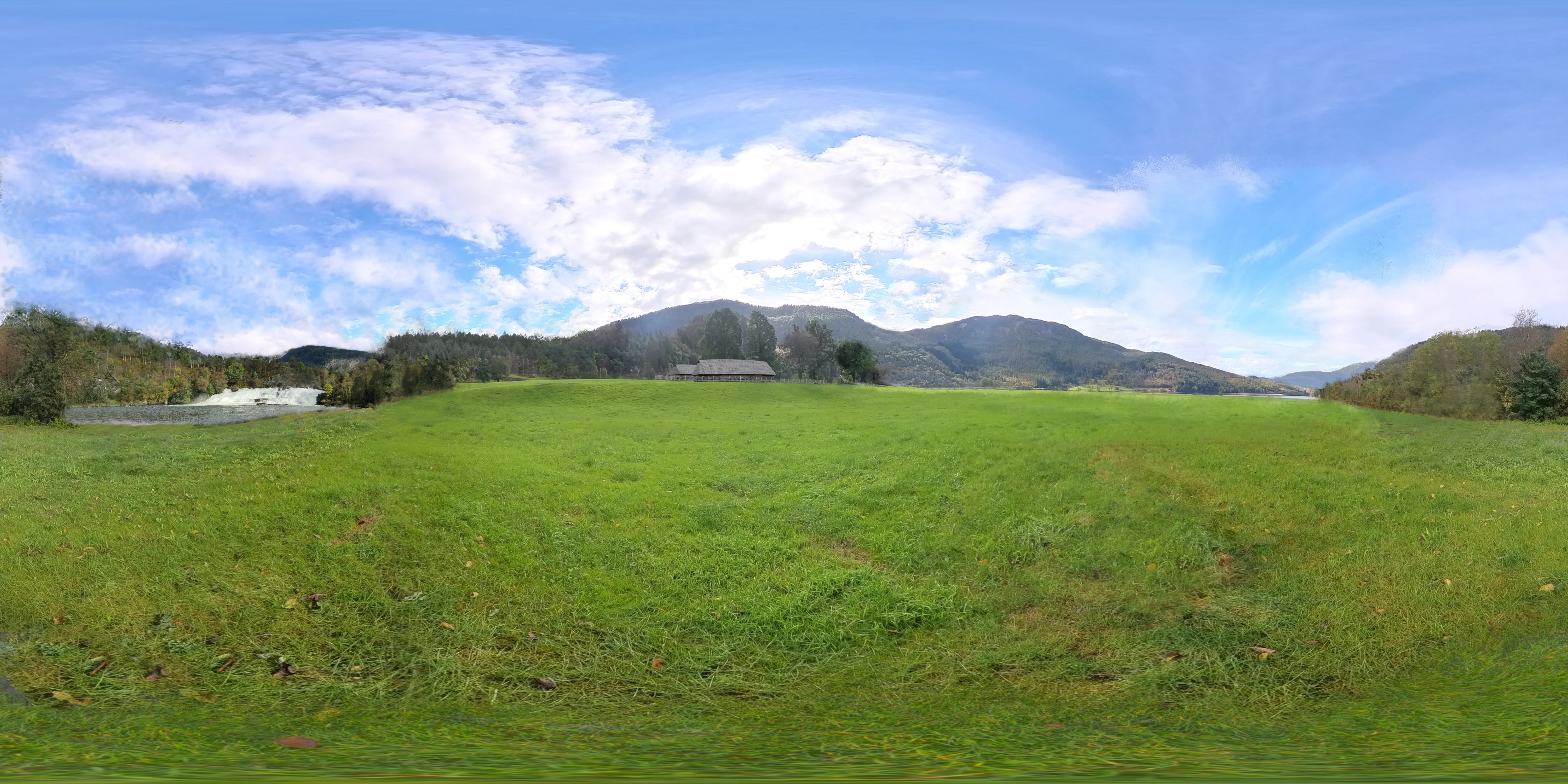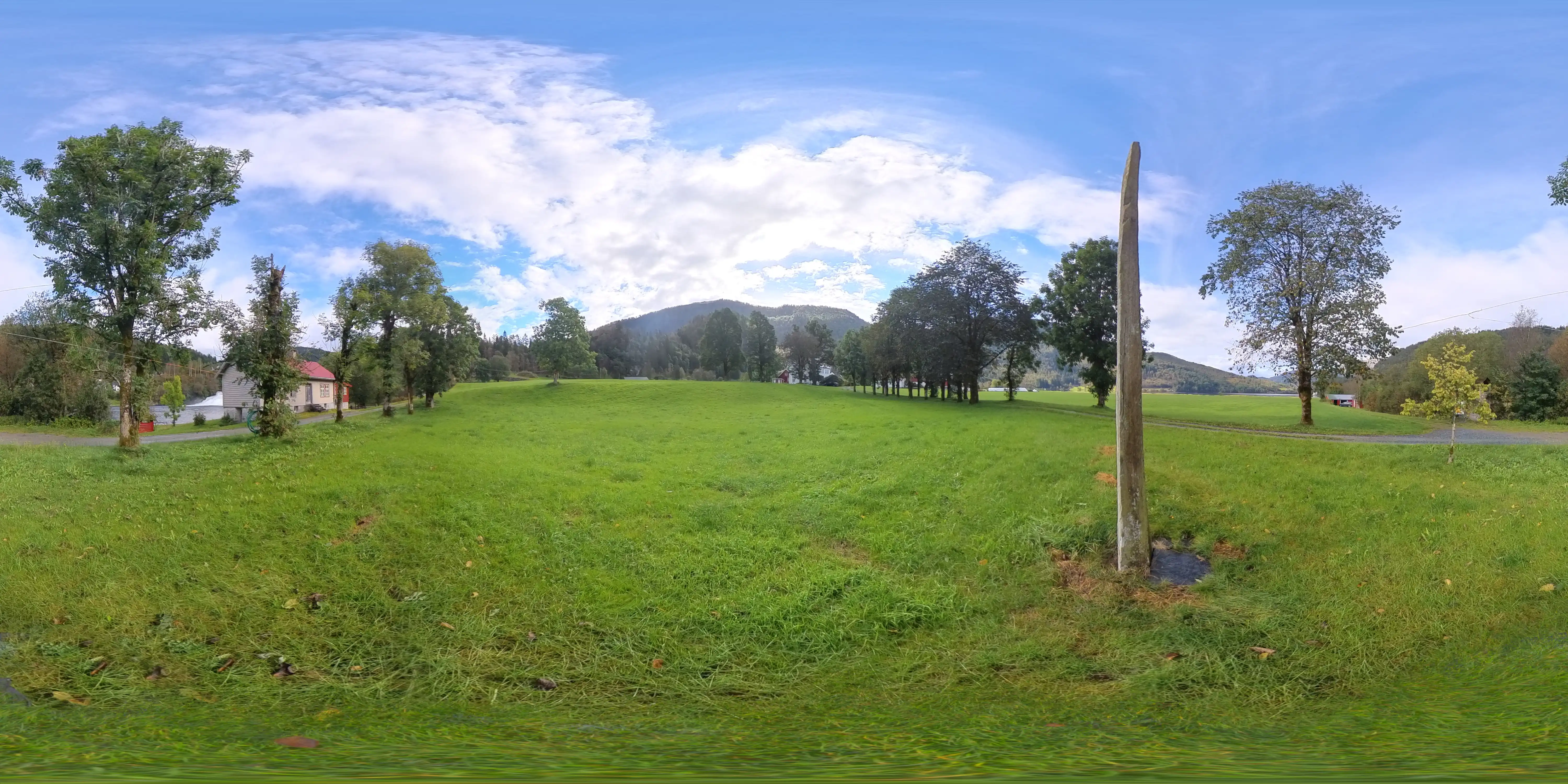
Along the edge of the river plain by Dalsfjorden lie the earliest traces of human
settlement. Around the year 400 a longhouse stood here, built with wall trenches and posts, partly
sunk into the ground.
The house was not large, but solid enough to withstand the winds from the fjord.
Inside the house lived a family who depended on farming and keeping animals.
Cows and sheep were kept at one end, while people slept and worked at the other.
The fire burned low in the centre and provided warmth and light.
Around the house were small fields on the driest parts of the terrace, while the meadows down towards the
fjord provided grazing.
This was a time of social change.
Contact with regions further south in Europe brought new goods and ideas.
Even in a place like Osen these changes could be noticed, perhaps through rare objects or new ways of
organising the farm.
Yet life remained local, closely tied to the land and nature.
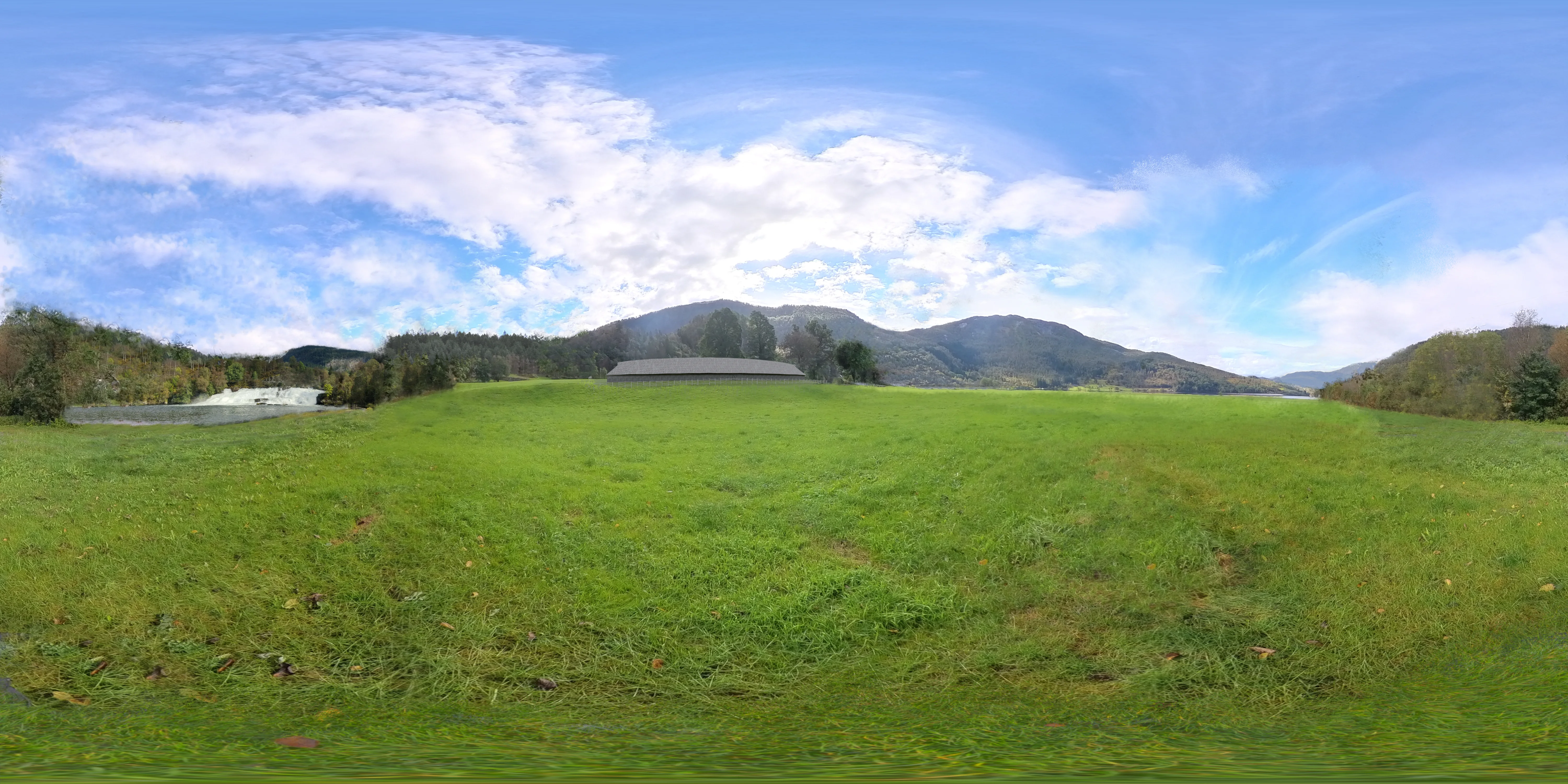
By now a large longhouse rose on the terrace at Osen. It measured over 40 metres —
an impressive building that testified to power and wealth.
The posts stood in straight rows and supported the roof over a three-aisled hall where both people and
animals lived.
This was no longer just an ordinary farm. A powerful family lived here, perhaps a local chieftain. From
the house one could look out over the fjord, where boats came and went. Osen functioned as a hub between
land and sea routes, and the farm profited from trade and contacts with other areas.
Inside the longhouse much took place: feasts were held, agreements were made and resources were managed.
The hearth lit the room where people gathered, and along the walls were benches and workspaces.
Around the house lay several smaller buildings — workshops and storehouses. The farm had become a centre
in the landscape, both economically and socially. This reflected larger societal changes, where power and
wealth concentrated in fewer hands.
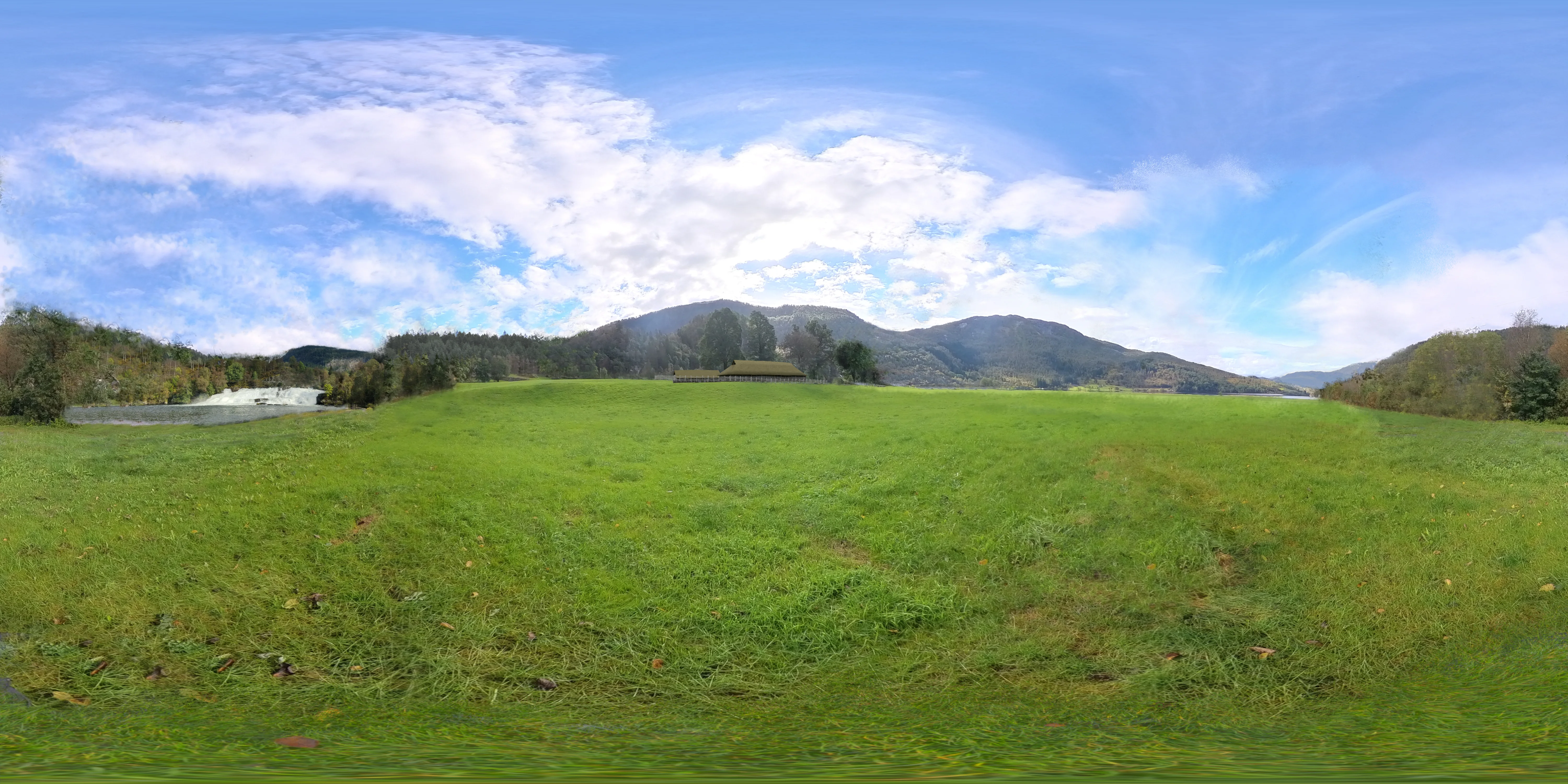
The longhouse still persisted as a building tradition, but it was now smaller — about
20–25 metres long. The farm remained important, but its organisation had changed.
There could be several buildings on the yard, each with its own function.
Inside the house a central fire burned. Around it people worked with crafts — spinning, weaving and
repairing tools. Finds of spindles and loom weights indicate textile production. Everyday life was busy and
varied.
Out on the fjord boats sailed with their sails. Trade along the North Sea brought new opportunities, and
Osen remained a good place to load and unload goods. The farm was part of a larger network, where political
alliances and trade played an important role.
Even though society was more complex, many old traditions continued. The longhouse remained the core of
life, and agriculture was the foundation of everything.
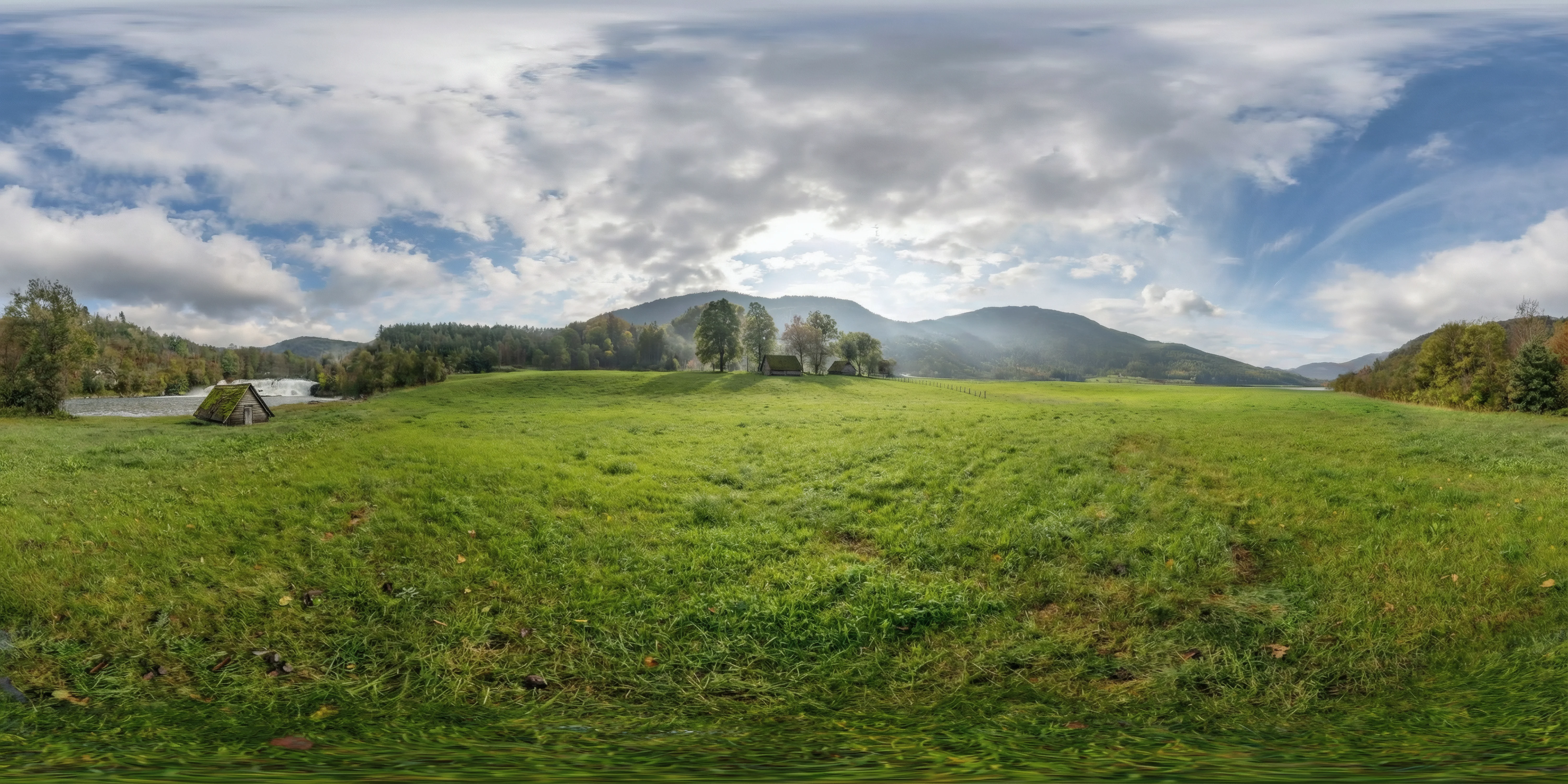
By this time the farm had changed character. The longhouse had disappeared, and in its
place were several smaller buildings with more specialised functions.
A pit-house lay partly buried in the ground — used for crafts, perhaps weaving.
Another house had a stone-laid floor, indicating a more permanent building practice. Here there may have
been a hearth-house or a brewing room, where food and drink were prepared. Concentrations of boiling
stones show intensive use of heat and cooking.
The farm was now organised more like a courtyard with several buildings, not one large house. This
reflected a broader societal change where functions were separated — dwelling, work and storage gained
their own spaces.
Christianity had also taken hold, and society was connected to new power structures. Yet the farm still
lay in the same place as before. The continuity is clear: over the centuries people have lived, worked and
shaped the landscape here at Osen.
Today none of the oldest farm buildings remain at Osen. Knowledge of them comes from archaeological
excavations.
These excavations have uncovered traces of earlier settlement and provided insight into how the farm once
looked and functioned.
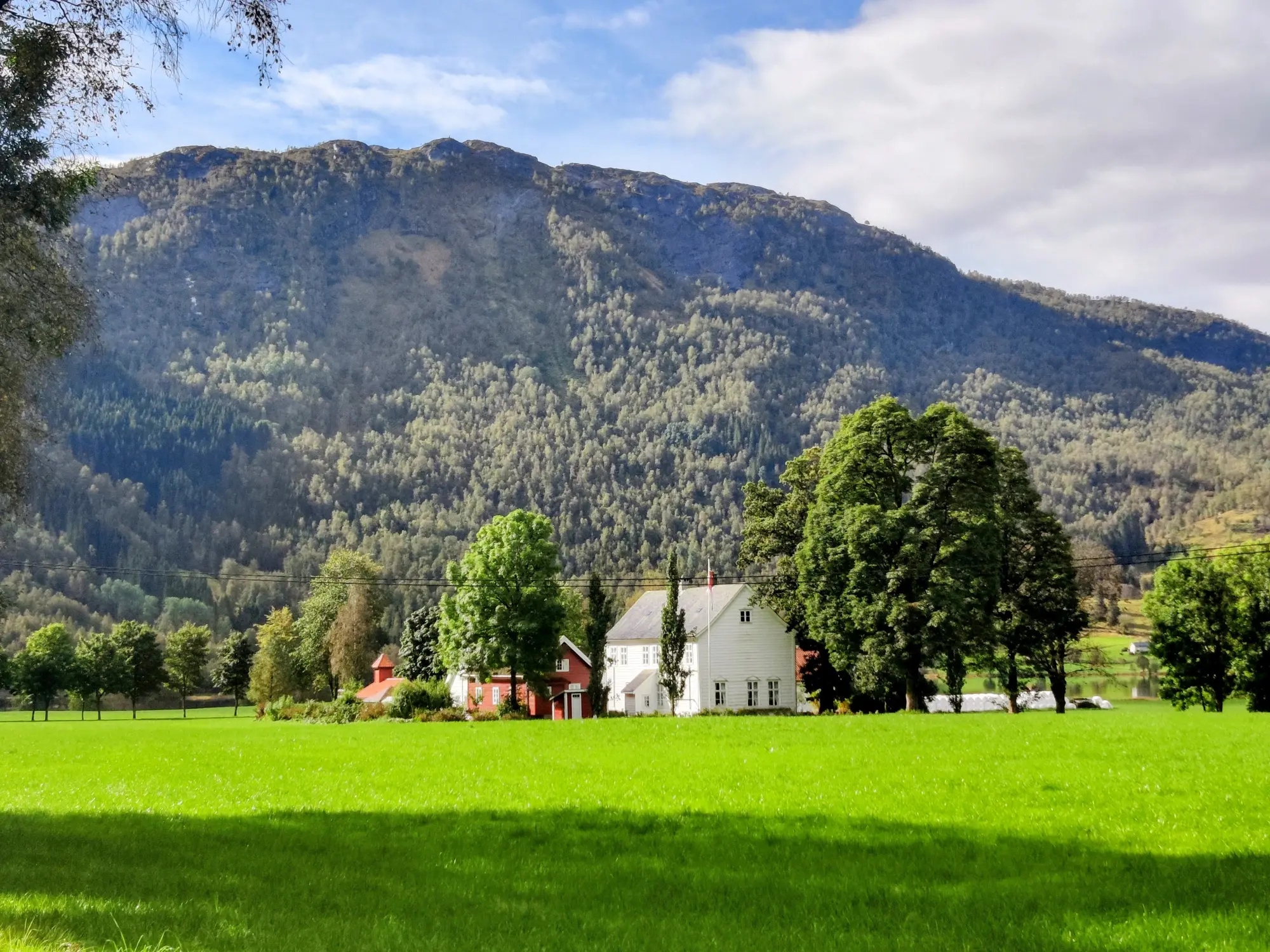
Although the original buildings are gone, the farm is still one of the most important historic farmsteads
in the area. The site today consists of newer buildings, but many of these are also of considerable age
and architectural value, helping to convey the history of the place.
The farm and its buildings have been well preserved and present a coherent farmstead of high cultural and
historical value. There are many interesting traces and qualities here — both visible in the built
environment and hidden beneath the ground — which together make Osen a place where history is still clearly
present.
The earliest farmstead
The oldest farmstead at Osen can be traced back to the Late Roman Iron Age, around 300–400 AD. Traces of buildings appear as wall trenches and postholes, probably from a longhouse. The farm lay on a terrace with good arable land and close access to the fjord. The settlement was likely a simple farm with one main house where both people and animals lived, and with agriculture as the main livelihood.
The Merovingian-period longhouse
Around year 600 a large three-aisled longhouse of over 40 metres was erected. This house testified to a farm of high status and perhaps a leading role in the area. Its location provided a good view over Dalsfjorden, and the farm likely functioned as a local power centre linked to trade and traffic. The longhouse combined dwelling, feasting and governance in a single building, as was common in chieftain societies.
The Viking-age farmstead
In the Viking Age the farmstead became more divided. Instead of a single large longhouse there were smaller buildings with different functions. At Osen a longhouse from the late 9th century has been identified, probably around 20–25 metres long. The yard may have consisted of several houses where dwelling, craft and storage were separated. Still, the longhouse tradition persisted.
The medieval farmstead
In the Middle Ages a clear change occurred. The farmstead came to consist of several specialised buildings, including pit-houses used for crafts and houses with stone-laid floors. This indicates a more differentiated operation of the farm. The old longhouse gradually disappeared and building practices moved towards smaller units and new construction types.
The farm today
Today Osen farm is a working agricultural enterprise producing milk and meat, yet it still occupies the same site as in prehistory. The farm has been inhabited for several thousand years and has served as a trading centre and assembly place. This demonstrates a rare continuity from the Iron Age to the present.
Osen and Bygstad
Osen was strategically located where the Gaula River meets Dalsfjorden, making it a natural hub between the sea and the valley. Bygstad lies nearby, and the area was closely connected through travel, trade and political power. In the Viking Age Osen may have been a chieftain's seat, indicating regional significance. Goods from the inland were transported via Osen to the fjord, linking the valley farms to coastal trade.
Boathouses in earlier times
Boathouses were important parts of farms along the fjord. On a farm like Osen, with direct access to the sea, boathouses were located at the shoreline where boats were stored and maintained. These boats were crucial for transport, fishing and trade, especially in the Iron Age and Viking Age when the sea was the main route of travel. The boathouses therefore reflect the farm's role as a hub between land and sea.